“The best thing you can do for the environment is not buy new things,” says WCCLS Data Analyst Jessica Gagnon. “From that perspective, libraries are a good option for a consumer.” She calculated that the top 100 circulated items have been borrowed a total of 52,387 times! There are countless ways the library can help you live a greener life besides borrowing books. In honor of Earth Day, we’re sharing 7 ways that the library helps you be eco-friendly.
-
Library of Things
Each WCCLS member library has a Library of Things, where you can borrow non-traditional items from baking pans to pressure washers and more. “A patron may need a luggage scale or a bike repair kit only once or twice a year. By borrowing these items from the library instead of buying them from the store, a patron can reduce the amount of waste they create,” says Stephanie Milbrodt, WCCLS Cataloging Librarian. Browse the Library of Things and try something new.
-
Used Books and More
Most WCCLS libraries are associated with a volunteer-run organization, often called a “Friends group” that accepts donations for used books and other media like DVDs and CDs. The Friends typically sell used books, and all funds raised benefit the library. Whether you want to donate books that you are ready to part with or bargain hunt for your next great read, the Friends can help.
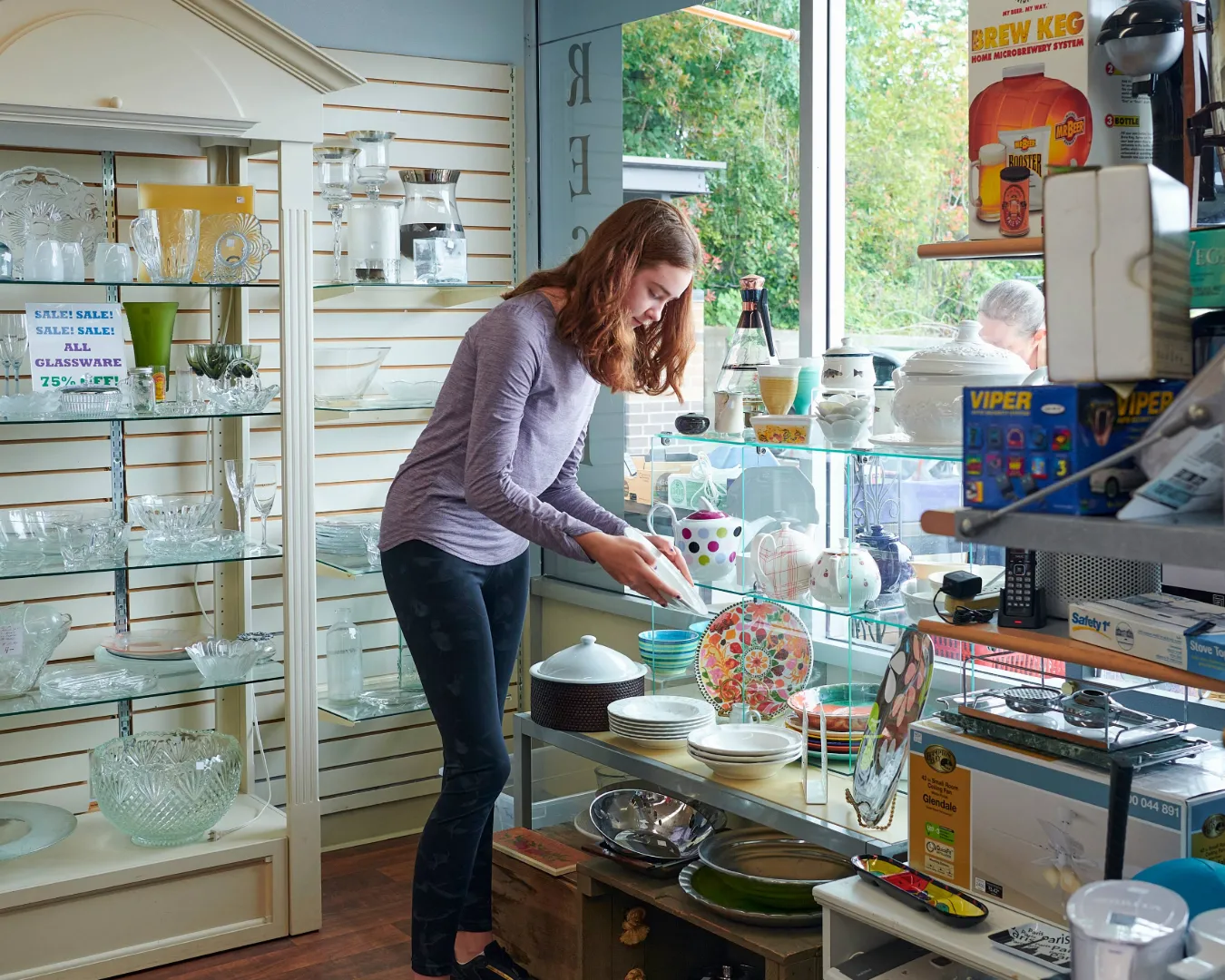
Volunteers with the Cedar Mill Community Library Association operate Second Edition Resale, a thrift store that sells clothing and household items. Stop by the store, located next to Cedar Mill Library, to donate or shop.
-
Free Events
“Libraries act as conduits for resource sharing,” says Stephanie. From plant swaps to puzzle exchanges and beyond, libraries host an array of events where people with similar interests can come together and engage in new experiences while also reducing waste and saving money. Search the calendar for a list of upcoming events.
-
Makerspaces
Some libraries have makerspaces, where you can use tools ranging from 3D printers to vinyl heat presses at no cost to you! Why buy a sewing machine to hem your pants at home when you can just stop by a makerspace instead? You can visit a makerspace at Beaverton City Library Main, Cornelius Public Library, Hillsboro Public Libraries Brookwood and Shute Park, and Tualatin Public Library.
-
Recycle Hubs for Unique Items
Some WCCLS libraries serve as convenient locations for recycling items, like an old pair of reading glasses or an outdated cell phone. Ask your local library for a list of items that you can recycle at that location.
-
Seed Libraries
This one is for the gardeners! Some WCCLS libraries offer seed libraries that let you take and donate seeds to share with others. You can currently find seed libraries at Aloha Community Library, Banks Public Library, Cedar Mill and Bethany Community Libraries, Sherwood Public Library, and Tigard Public Library. Seed libraries are sprouting soon at Forest Grove City Library and West Slope Community Library. What a great way to try planting something new in your garden.
-
Digital Collections
The digital nature of e-books and audiobooks offer more flexibility than physical collections. For example, when an upcoming pop culture biography gains more hype before its release date, “We buy a single copy and let patron interest inform how many more copies we need to purchase,” says Courtney Sheedy, WCCLS E-Content Librarian. Then once the demand dies down, “We’re not sitting on a copious number of physical copies, and everyone gets to know the tea!”
If you liked this post, read Steering a Fleet Toward Fuel Efficiency: How WCCLS Improved Courier Operations.
WCCLS is committed to continuously improving our sustainability efforts to ensure that we are able to connect people with life-changing library services for many years to come. In the video below, watch how a library book goes from one patron to the next in Washington County!